








Košík
Váš košík je momentálne prázdny.
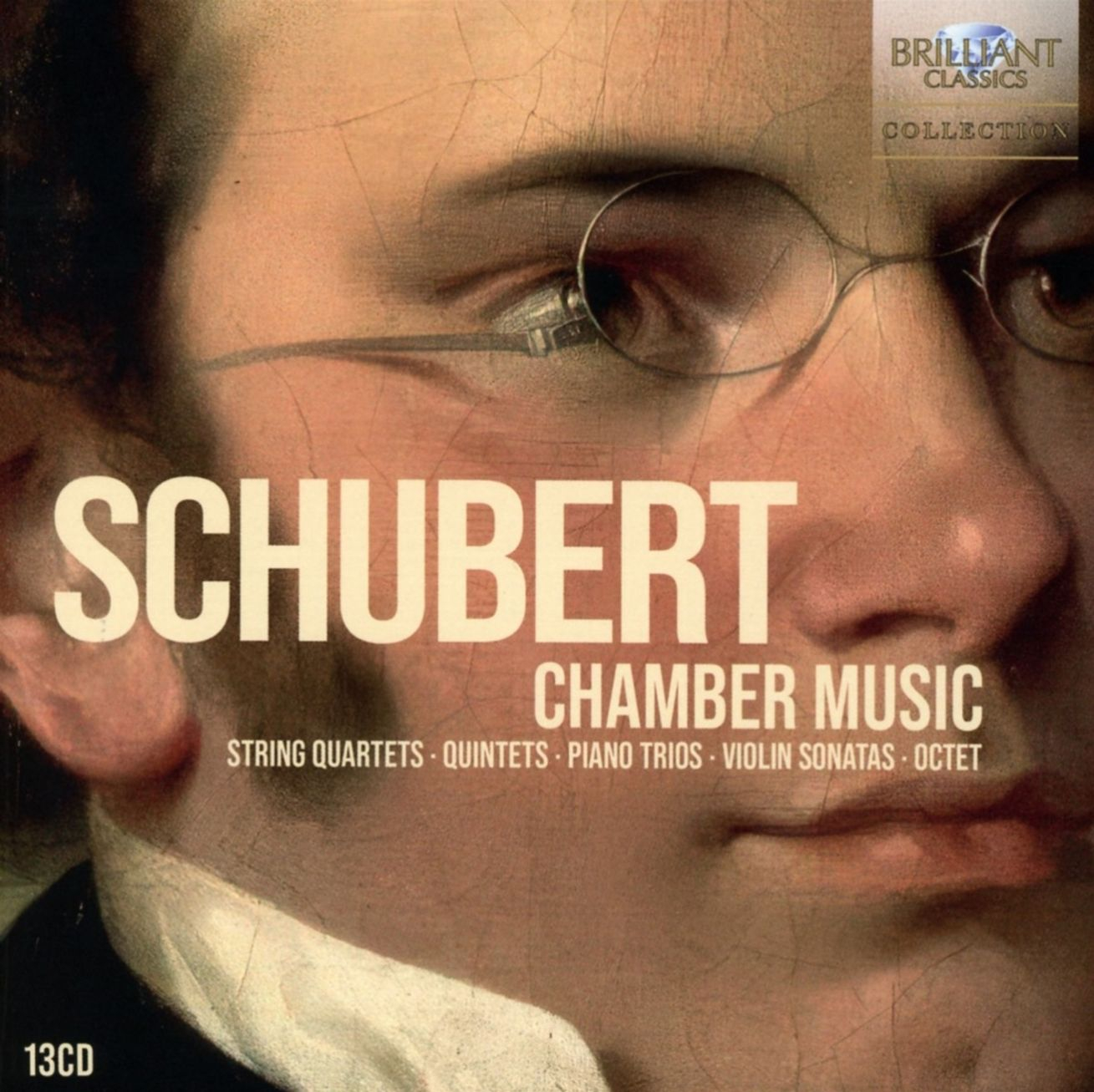
Schubert: Chamber Music (13 CD)
30,00 €
Formát:
CD BOX
Dostupnosť:
na sklade / dostupné okamžite
Katalógové číslo:
97668
EAN kód:
5063758976688
Autori:
Franz Schubert
Vydavateľ:
BRILLIANT CLASSICS
Zoznam skladieb
Dátum vydania: 14. 11. 2025CD 1
String Quartet No. 7 in D Major, D. 94
1 I. Allegro
2 II. Andante con moto
3 III. Menuetto (Allegretto) – Trio
4 IV. Presto
5 Andante in C Major, D. 3
String Quartet No. 13 in A Minor, D. 804
6 I. Allegro ma non troppo
7 II. Andante
8 III. Minuetto (Allegretto) – Trio
9 IV. Allegro moderato
CD 2
1 Overture in B-Flat Major, D. 470: Adagio maestoso – Allegro
String Quartet No. 8 in B-Flat Major, D. 112
2 I. Allegro ma non troppo
3 II. Andante sostenuto
4 III. Minuetto – Trio
5 IV. Presto
String Quartet No. 11 in E Major, D. 353
6 I. Allegro con fuoco
7 II. Andante
8 III. Minuetto – Trio
9 IV. Rondo. Allegro vivace
CD 3
String Quartet No. 1 in G Minor/B-Flat Major, D. 18
1 I. Andante – Presto vivace
2 II. Menuetto – Trio
3 III. Andante
4 IV. Presto
5 Menuets and 5 German Dances, D. 89:
5 Menuet I – Trio 1 – Trio 2
6 Menuet II
7 Menuet III (early version) – Trio 1 – Trio 2
8 Menuet IV
9 Menuet V – Trio 1 – Trio 2
10 German Dance I – Trio 1 – Trio 2
11 German Dance II – Trio 1 – Trio 2
12 German Dance III – Trio
13 German Dance IV
14 German Dance V – Trio 1 (early version) – Trio 2 – Coda
String Quartet No. 5 in B-Flat Major, D. 68
15 I. Allegro maestoso
16 II. Allegro
5 Menuets and 5 German Dances, D. 89
17 Menuet III (later version) – Trio 1 – Trio 2
18 German Dance V – Trio 1 (later version) – Trio 2
CD 4
String Quartet No. 14 in D Minor, D. 810
1 I. Allegro
2 II. Andante con moto
3 III. Scherzo. Allegro molto – Trio
4 IV. Presto – Prestissimo
String Quartet No. 6 in D Major, D. 74
5 I. Allegro ma non troppo
6 II. Andante
7 III. Minuetto. Allegretto
8 IV. Allegro
9 Minuet in D Major, D. 86
CD 5
String Quartet No. 4 in C Major, D. 46
1 I. Adagio – Allegro con moto
2 II. Andante con moto
3 III. Menuetto – Trio
4 IV. Finale. Allegro
5 Overture in C Minor, D. 8a: I. Largo – Allegro
String Quartet No. 10 in E-Flat Major, D. 87
6 I. Allegro moderato
7 II. Scherzo – Trio
8 III. Adagio
9 IV. Allegro
String Quartet No. 12 in C Minor, D. 703
10 I. Allegro assai
11 II. Andante (fragment)
CD 6
String Quartet No. 2 in C Major, D. 32
1 I. Presto
2 II. Andante
3 III. Menuetto. Allegro – Trio
4 IV. Allegro con spirit
String Quartet No. 3 in B-Flat Major, D. 36
5 I. Allegro
6 II. Andante
7 III. Menuetto. Allegro – Trio
8 IV. Allegretto
String Quartet No. 9 in G Minor, D. 173
9 I. Allegro con brio
10 II. Andantino
11 III. Minuetto. Allegro vivace – Trio
12 IV. Allegro
CD 7
String Quartet No. 15 in G Major, D. 887
1 I. Allegro molto moderato
2 II. Andante un poco moto
3 III. Scherzo. Allegro vivace – Trio. Allegretto
4 IV. Allegro assai
5 String Quartet in C Minor, D. 103: Grave – Allegro
CD 8
String Quintet in C Major, D. 956
1 I. Allegro non troppo
2 II. Adagio
3 III. Scherzo. Presto
4 IV. Allegretto
CD 9
Quintet in A Major, D667 “The Trout”
1 I. Allegro vivace
2 II. Andante
3 III. Scherzo, presto
4 IV. Tema con variazioni (Die Forelle)
5 V. Allegro giusto
Sonata in A Minor, D821 “Arpeggione Sonata”
6 I. Allegro moderato
7 II. Adagio
8 III. Allegretto
CD 10
Piano Trio No. 1 in B-Flat, D. 898
1 I. Allegro moderato
2 II. Andante, un poco mosso
3 III. Scherzo – Trio – Allegro
4 IV. Rondo – Allegro vivace – Presto
5 Notturno in E-Flat, D. 897
CD 11
Piano Trio No. 2 in E-Flat, D. 929
1 I. Allegro
2 II. Andante con moto
3 III. Scherzando: Allegro moderato
4 IV. Allegro moderato
CD 12
Violin Sonata in D Major, D. 384
1 I. Allegro molto
2 II. Andante
3 III. Allegro vivace
Violin Sonata in A Minor, D. 385
4 I. Allegro moderato
5 II. Andante
6 III. Menuetto & Trio
7 IV. Allegro
Violin Sonata in G Minor, D. 408
8 I. Allegro giusto
9 II. Andante
10 III. Menuetto & Trio
11 IV. Allegro moderato
Violin Sonata in A Major, D. 574
12 I. Allegro moderato
13 II. Scherzo & Trio
14 III. Andantino
15 IV. Allegro vivace
CD 13
Octet in F, D. 803, Op.posth. 166 for clarinet, horn, bassoon, string quartet and double bass
1 I. Adagio – Allegro
2 II. Adagio
3 III. Allegro vivace – Trio
4 IV. Andante con variazioni
5 V. Menuetto: Allegretto
6 VI. Andante molto – Allegro
Popis
Franz Schubert’s chamber music occupies a vital place in the Western classical canon, demonstrating both his lyrical genius and emotional depth. Though he is widely known for his lieder and symphonies, his chamber works represent some of the most profound and innovative compositions of the early Romantic era.
The String Quintet in C major, D. 956, written just weeks before Schubert's death in 1828, stands as one of the towering achievements in chamber music. Scored for two cellos instead of the more common two violas, the work is known for its rich, warm textures and emotional contrasts. The slow movement, in particular, is a masterclass in stillness and poignancy, often cited as one of the most sublime moments in all of chamber music.
Schubert’s string quartets trace his compositional development and deepening expressiveness. The Death and the Maiden quartet (D. 810) is especially significant, combining dramatic intensity with variations on his earlier song of the same name. The juxtaposition of lyrical beauty with stark fatalism reflects Schubert’s own grappling with mortality and human vulnerability.
His piano trios blend lyricism and formal sophistication. The trios are notable for their expansive melodies, rich harmonic language, and a sense of narrative continuity that hints at the symphonic.
The violin sonatas (often referred to as "sonatinas") are earlier works, more modest in scope but filled with charm and grace. While not as emotionally profound as his later chamber works, they already display Schubert’s melodic gift and innate sense of dialogue between instruments.
The Trout Quintet (D. 667) is perhaps Schubert’s most popular chamber work. Its unusual instrumentation—featuring piano, violin, viola, cello, and double bass—and the famous set of variations on his song “Die Forelle” make it instantly appealing. Yet beyond its surface charm, the work demonstrates Schubert’s brilliance in crafting color and contrast, blending joy and depth seamlessly.
Altogether, Schubert’s chamber music reveals a composer capable of exploring the most intimate corners of the human soul. These works remain essential listening, offering profound insight into the expressive potential of small ensembles.
Excellent performances by the Diogenes Quartet, the Amsterdam Piano Trio and the Berlin Philharmonic Octet. Prihlásenie
Newsletter


Copyright 2014-2026 © Hummel Music