








Košík
Váš košík je momentálne prázdny.
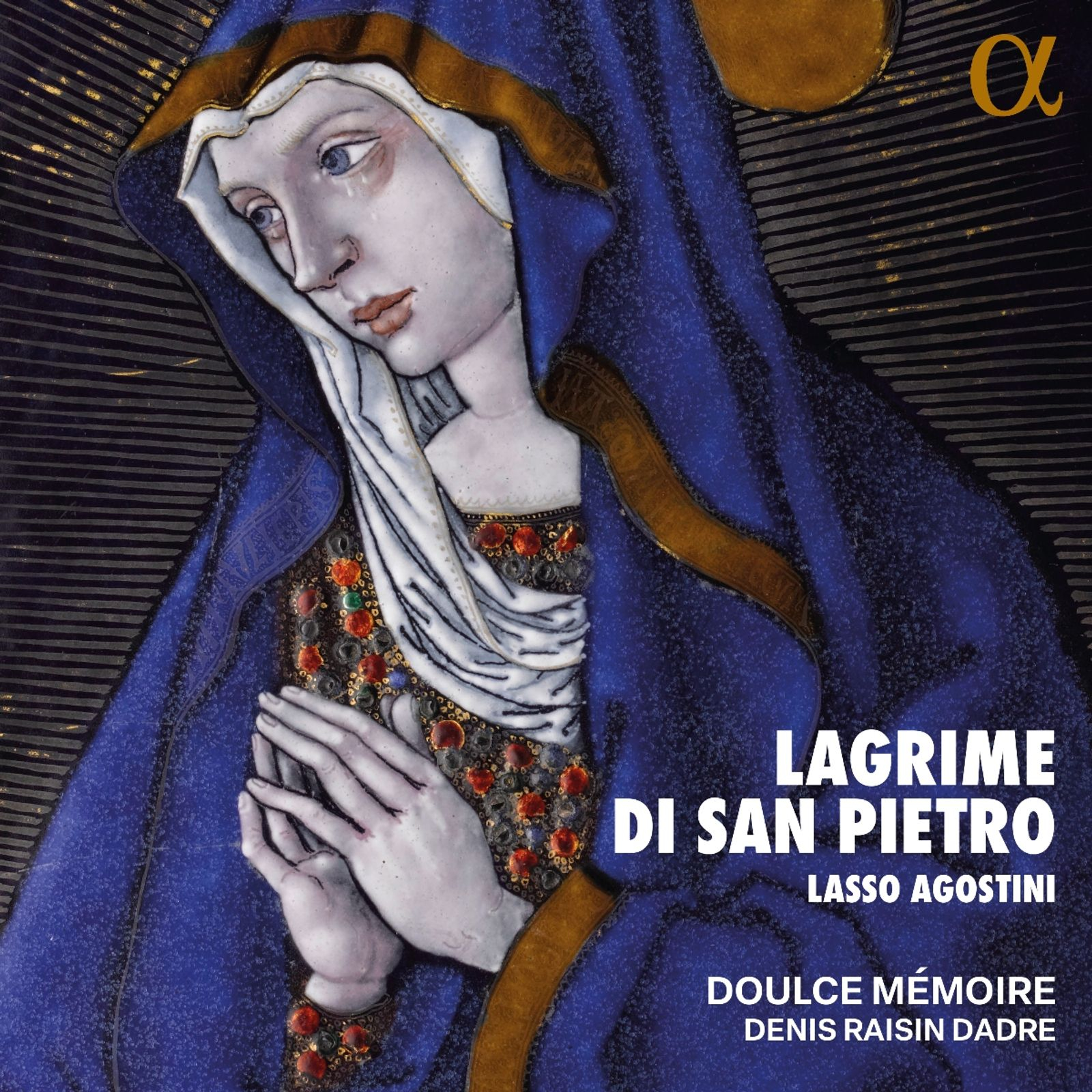
Lassus: Lagrime di San Pietro
16,00 €
Formát:
CD
Dostupnosť:
na sklade / dostupné okamžite
Katalógové číslo:
ALPHA 1209
EAN kód:
3701624512098
Autori:
Lodovico Agostini, Orlando de Lassus
Interpreti:
Denis Raisin Dadre, Doulce Memoire
Vydavateľ:
ALPHA
Zoznam skladieb
Dátum vydania: 27. 2. 20261. Orlando di Lasso: Deficiat in dolore, LV 977 3:45
2. Anonymous: Al pie del duro sasso 4:39
Orlando di Lasso: Lagrime di San Pietro
3. No. 1, Il magnanimo Pietro, LV 1005 2:38
4. No. 2, Ma gli archi, che nel petto, LV 1006 3:01
Lodovico Agostini: Le lagrime pel peccatore
5. Vergine, se pietate 3:21
6. Le lagrime, i sospiri 3:34
Orlando di Lasso: Lagrime di San Pietro
7. No. 3, Tre volte haveva, LV 1007 2:29
8. No. 4, Qual'a l'incontro, LV 1008 2:58
9. No. 19, Queste opre, LV 1023 2:26
Lodovico Agostini:Le lagrime del peccatore
10. La morte è morta
11. La vita è breve 2:15
12. Svegliati omai 2:23
13. Chiudi gli orrechi 2:10
Orlando di Lasso: Lagrime di San Pietro
14. No. 10, Como falda di neve, LV 1014 3:10
15. No. 12, Quel volto, LV 1016 2:42
16. No. 9, Chi ad una ad una, LV 1013 2:16
Lodovico Agostini: Le lagrime del peccatore
17. L'anima mia, signore 2:40
18. Hore che'l ciel et la terra 3:12
19. La morte di colui 3:01
20. la croce già fù 2:26
Orlando di Lasso: Lagrime di San Pietro
21. No. 21, Vide homo, LV 1025 3:49
22. O sacro santo legno 4:11
Popis
This recording, made in January 2025 at Noirlac Abbey, is dedicated to Denis Raisin Dadre, who died suddenly on September 29 of the same year. With Doulce Mémoire, the ensemble he founded in 1989 and with which he brought Renaissance music to the world, Denis led the production of this album from start to finish. In the booklet he writes: "The Lagrime di San Pietro and the Lagrime del peccatore both deal with a theme that rarely appears in music: the denial of Jesus by Peter. Furthermore, both works are their composer's swan song. Munich, 1594: In the last year of his life, Orlando di Lasso composed his masterpiece, the pinnacle of Renaissance counterpoint and musical expressiveness. Ferrara, 1586: Lodovico Agostini published his last work, the language of which was primarily aimed at moving and overwhelming the listener by using all the already baroque means of chromaticism and dissonance."Prihlásenie
Newsletter


Copyright 2014-2026 © Hummel Music